
The Story of Marcus the Cat
The Story of Marcus the Cat
A year ago, on November 15th, the cat we had rescued from the street in late August 2023 passed away. He was a friendly, affectionate — and already very sick — house cat. It looked like his previous owners had simply kicked him out. Or maybe they were gone before he was.
He kept running out from an abandoned property that was up for sale, asking people for food. He was extremely skinny, blue-grey, with deep emerald eyes and an unusually long body.
 The photos don’t really show it, but he was very long and very skinny
For several days, my wife and I fed him on our way to the gym. But one day I noticed he was eating worse, and his condition wasn’t improving. We already had two cats at home that didn’t get along, so taking in a third one wasn’t even on the table.
Still, I caught myself thinking: one day I’ll walk by, and he just won’t come out anymore. And I won’t be able to forgive myself for doing nothing. We talked it over and decided to catch him and take him to my mom’s house — she was away at the time, and her place was empty.
An hour later, we came back, caught him, and thought the worst was behind him. Food, care, and medical attention were supposed to turn him into a healthy, well-groomed house cat.
My mom named him Marcus.
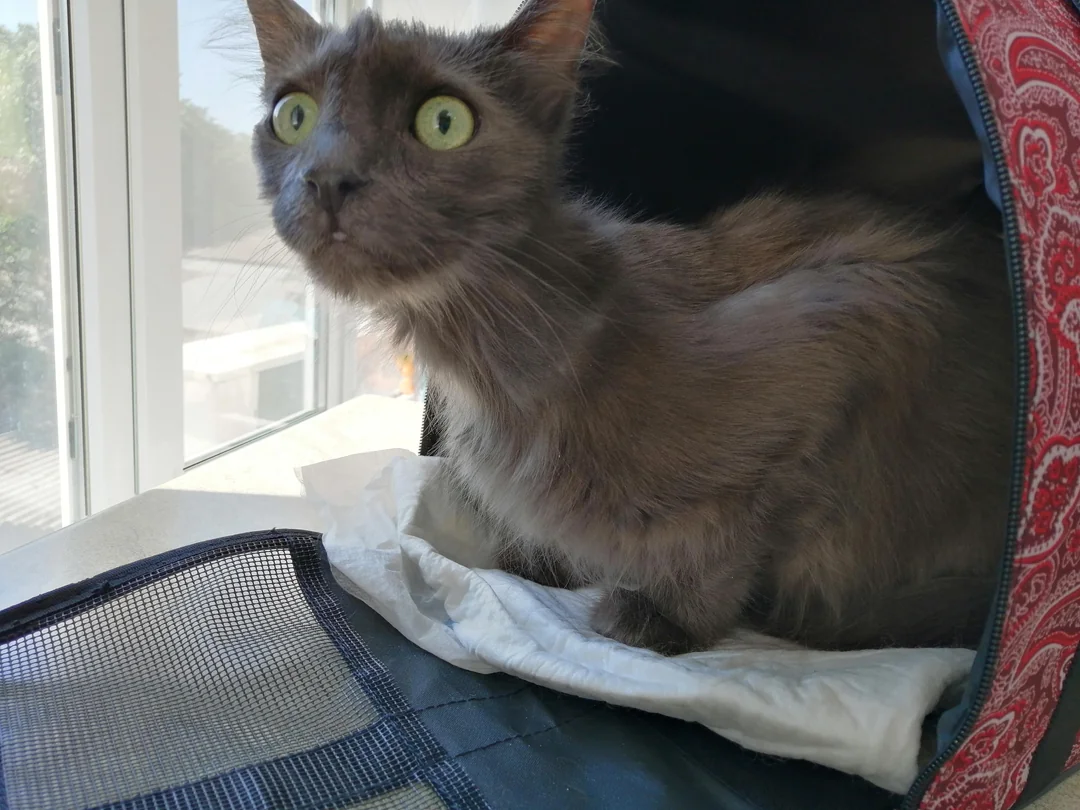 Vet visit the next day
The local clinic assumed he was just an old street cat in typical street-cat shape, and aside from parasite treatment, they didn’t think anything was wrong. They did note that he was neutered.
Back home, I even doubted for a moment — what if we took someone’s pet? I almost brought him back to the place we found him. But when we arrived, he had hidden somewhere in my mom’s kitchen, and I couldn’t find him. So I decided to leave him with my mom — and later convinced her to keep him.
A few days passed after parasite treatment, but Marcus still wasn’t gaining weight. When we picked him up from the street, he was around 2.7 kg (6 lbs), extremely low for his long body.
I took him to a different clinic. Ultrasound and blood tests showed chronic kidney disease, roughly stage 2, complicated by polycystic kidneys — a progressive condition.
That was the beginning of our treatment journey. His condition would improve, then suddenly crash — several times it felt like he wouldn’t make it, but he kept pulling through and eating again. He turned out to be a wonderful, people-oriented cat. We fought his illness together for 15 months. The hardest part was keeping him eating, finding a renal diet he’d accept, and giving him all the medications.
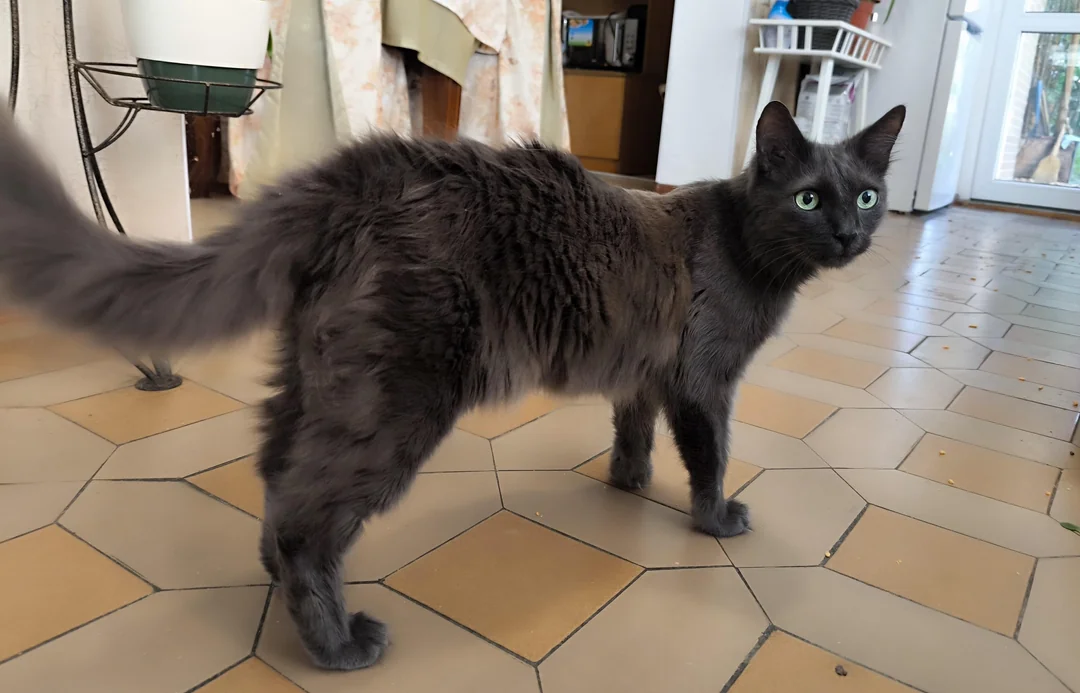 Here he’s in relatively good shape, almost a year later — around 4 kg
Kidneys are an amazing organ: the number of nephrons is fixed at birth, and over life they only decline. Besides filtering blood and removing toxins, they regulate several hormones that affect many vital systems.
This condition requires regular monitoring, adjustments to therapy, and often a large number of medications. In my view, owners must take responsibility for their animals: provide treatment or, in late stages, choose humane euthanasia — not look for “easy” solutions like simply abandoning them outside.
When Marcus passed, it was a difficult moment for everyone who cared for him, even though we knew it was inevitable. I’m not a particularly sentimental person, but the effort we put into supporting him — and what he gave back — created a special bond.
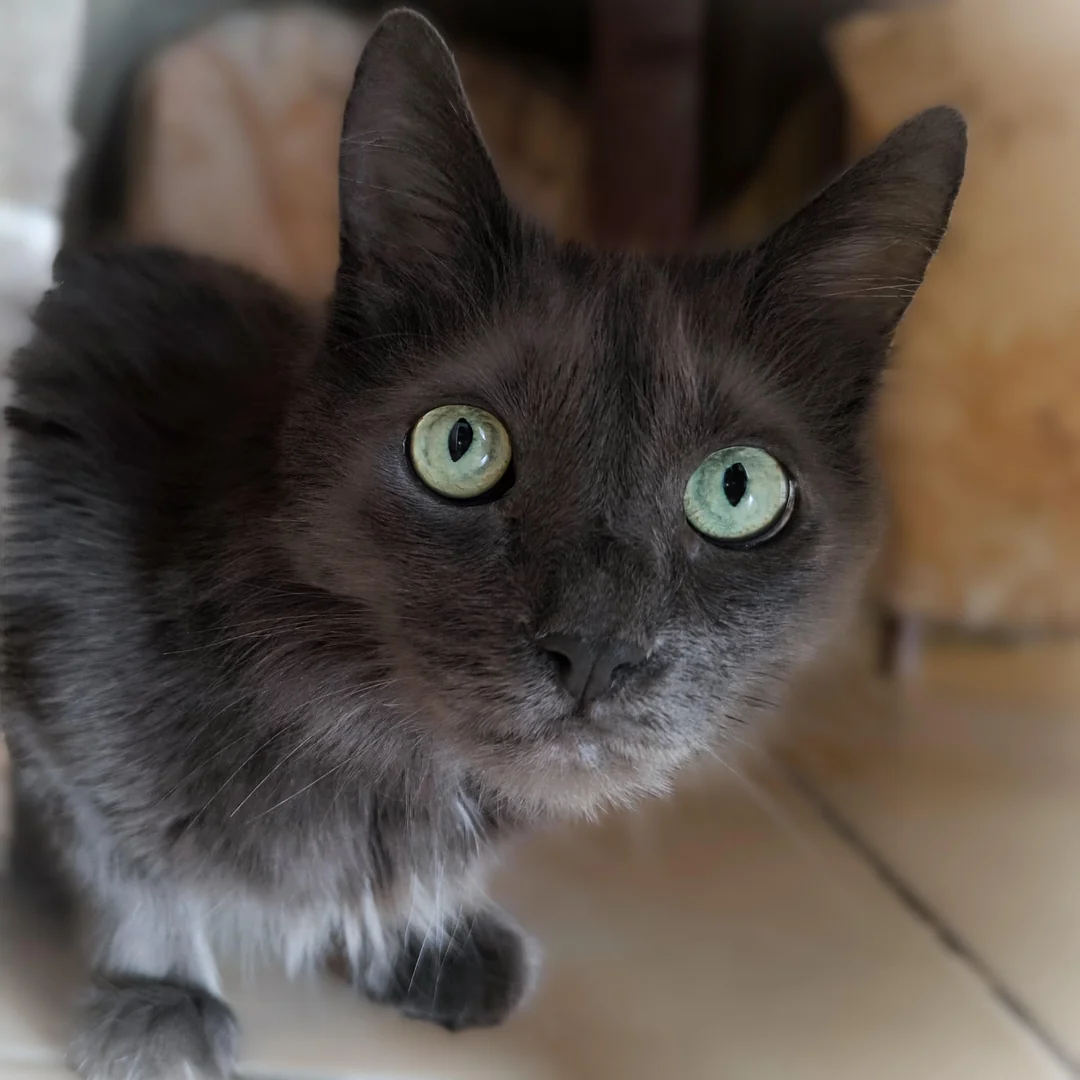
At some point, I realized I wanted to preserve his story so it wouldn’t fade with time. That became the first spark behind an enthusiastic project I’m working on — Pets Memorial. I’ll share more about it next post.